In today's digital landscape, Search Engine Optimisation (SEO) plays a vital role in ensuring online visibility. Whether you're a small business or a large enterprise, SEO directly influences how easily users can find your content. With AI (Artificial Intelligence) transforming industries, automating SEO processes in platforms like Drupal can significantly improve efficiency and results.
Drupal, a powerful content management system (CMS), offers flexibility and scalability for building websites. When paired with AI tools, Drupal can streamline and automate many aspects of SEO, making it easier for website owners and administrators to optimise their sites without requiring extensive manual intervention.
In this blog, we will explore how AI can be utilised to automate SEO in Drupal, as well as the tools and techniques that can help you achieve better search rankings.
Why automate SEO?
Before diving into the specifics of AI, it's important to understand why automating SEO is essential. SEO is a multifaceted and time-consuming process that requires constant attention. From keyword research to content optimisation, backlink management, and technical SEO, there’s a lot to manage. Here’s why automation is crucial:
Introducing the AI SEO Drupal module
The AI SEO module is a contributed Drupal module that leverages AI services (e.g., OpenAI) to automate and assist with SEO tasks. It’s part of the broader AI Core ecosystem and integrates with your content types to generate:
Whether you're publishing articles, landing pages, or product descriptions, this module can help ensure that your content meets SEO best practices without extra manual effort.
Key features of the AI SEO module
1. Content analysis & suggestions
When you edit content, AI SEO analyzes your text and suggests improvements like better keyword use, clearer headlines, or restructuring paragraphs for SEO effectiveness.
2. Meta tag generation
The module generates contextually relevant:
This helps editors focus on writing content while AI handles the technical SEO layers.
3. Image Alt text generation
AI reads your images (file names and optionally visual description via prompts) and generates meaningful alt text, which improves accessibility and helps search engines index image content.
4. Keyword suggestions
Using Natural Language Processing (NLP), AI SEO identifies important keywords from the content and recommends additional terms that could boost search relevance.
5. Bulk optimization via Drush
AI SEO provides a Drush command for optimizing multiple nodes at once, making it perfect for retrofitting existing content.
How to use the AI SEO module in Drupal
1. Install required modules
You'll need:
2. Configure API access
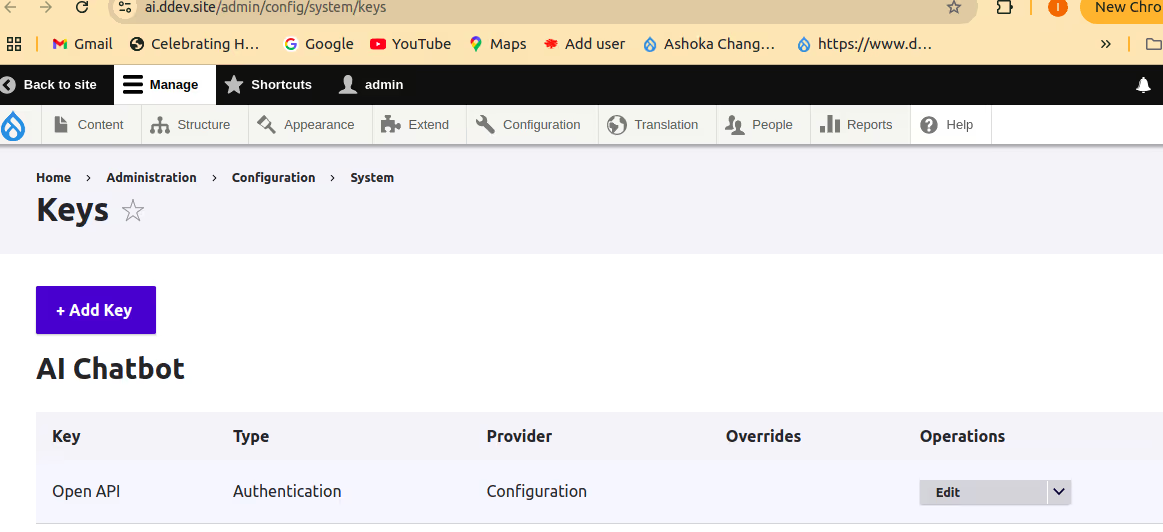
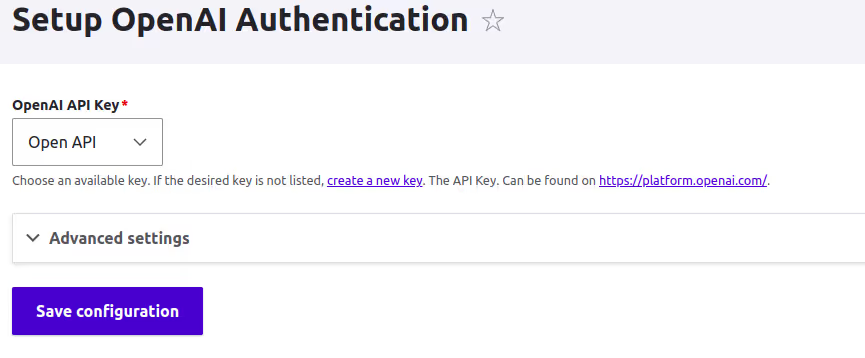
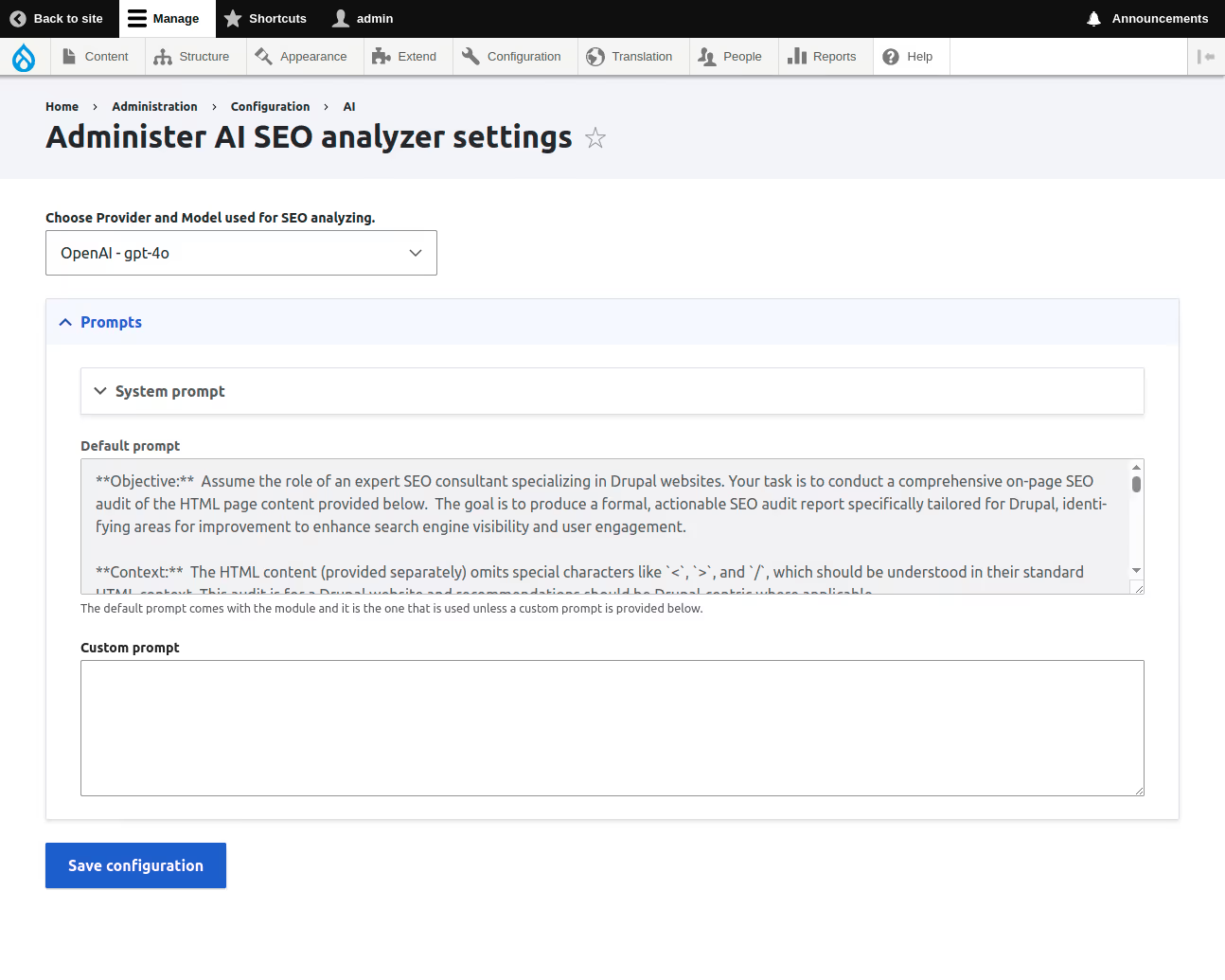
3. How the AI SEO module works
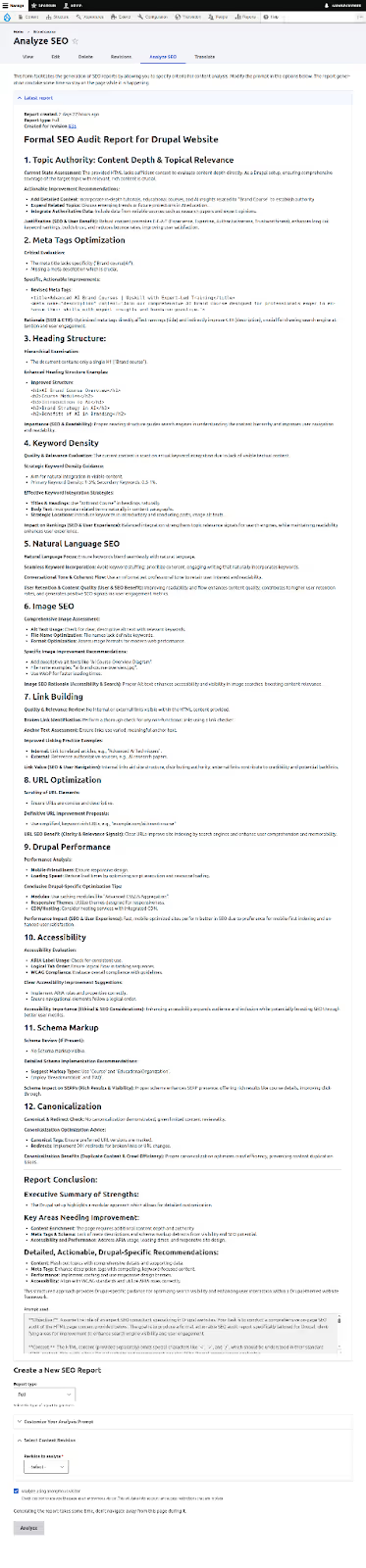
When editing a content node, the module provides an "Analyse SEO" tab on the sidebar or as a local task tab. This tab allows users to analyse the node’s current content, including title, summary, and body fields, and generate a comprehensive SEO report.
4. How to generate an SEO report
Step 1: Create or Edit a Node
Navigate to Content > Add Article or edit an existing one.
Step 2: Click on the "Analyse SEO" Tab
You will see a tab titled "Analyse SEO" while editing the content. Click it to start the process.
Step 3: SEO Report Generation
Once clicked, the module:
This report includes:
Extra features
Why use AI SEO?
Conclusion
The AI SEO module for Drupal brings AI intelligence directly into the CMS, allowing editors to create search-optimized content without needing to switch between tools. Using this module, teams can generate meta descriptions, titles, alt text, and concise summaries directly in the edit screen, then refine them with real-time keyword and structure suggestions that follow the guidance in Google’s SEO Starter Guide.
Drupal’s modular architecture lets publishers scale content creation while keeping precision and consistency intact, which is crucial for large, content-heavy sites. The result is faster publishing, fewer manual errors, and stronger search performance.
Looking ahead, AI in Drupal SEO will open fresh possibilities. Expect automatic detection of content decay, AI-suggested rewrites for underperforming pages, topic prioritisation based on live search trends, and smarter internal linking and semantic clustering that adapt to competitor moves and user signals. For content-rich websites aiming to grow organic visibility, AI-driven SEO has shifted from nice-to-have to strategic imperative, and Drupal is positioned to lead this evolution.