There is always a world of difference between the test environment conditions and real environmental conditions. For example, we cannot trust the efficiency of a robot, car or any other equipment that is tested only in laboratories (test environments). And when these are brought to the real world or tested under real-world scenarios, there are 90-95% chances of failure.
The efforts of repairing this damage or loss are very high as compared to the efforts required to repair if the same issue were found in the earlier testing stage.
You can come across a similar case in software development, even after testing the software in all possible ways there are chances that some bugs escape to User Acceptance Testing (UAT).
What is User Acceptance Testing?
User Acceptance Testing (UAT) is the testing phase conducted by the client to validate the developed software system before its deployment to the production environment. This testing phase occurs during the final stage of the testing process, following the completion of functional, UI, and integration tasks.
Why is User Acceptance Testing necessary?
As all know User Acceptance Testing occurs in the final stage of testing. Its purpose is to ensure that the developed software system meets the client's and end-users real-time requirements and acceptance criteria. Involving the client/stakeholders in testing the system against the specified requirements, can identify issues or areas of poor usability in the testing stage before production deployment, and it helps to save the cost and time of issue fixing. This collaboration allows the development team to make necessary improvements based on the UAT feedback, ensuring that the final product meets the highest standards before its successful launch into production.
Here are a few cases that might introduce bugs in User Acceptance Testing and how to tackle them:
Case 1: Acceptance criteria not understood
Case 2: Testing "n" number of times is not sufficient
Case 3: Negative test cases suite is missing

Case 4: Collaboration between QAs and other team members
.avif)
Case 5: Participate in all project meetings
Case 6: Checklists for common scenarios are missing

Case 7: Test data is not sufficient
.avif)
Case 8: Poor site performance
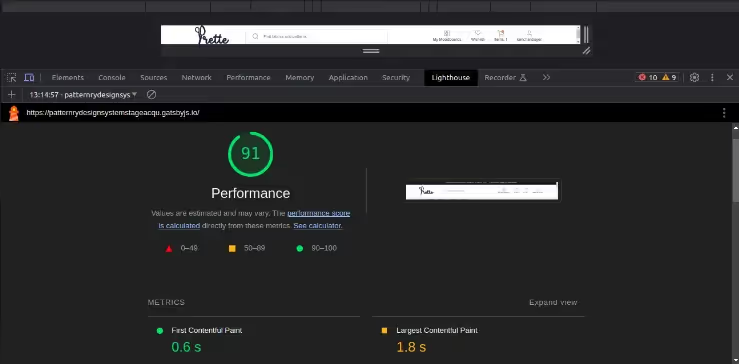
Case 9: UAT and QA environment metrics differ
Case 10: Regression tests are missing
.avif)
We should always focus on breaking the system in all possible ways to reduce the count of User Acceptance Testing bugs.
Happy Testing!