Design thinking is a humanized and creative way of solving problems. It’s human-centered, It's iterative, It’s cohesive, It’s feasible, It’s productive. It comprises five core phases: empathy, define, ideate, prototype, and test.
Design thinking has been embraced by the world's top design-oriented brands including IBM, Google, and Apple to create an absolute connection with the users. Design thinking is not just applicable to the design industry and practiced by designers, It is applied across a variety of industries, organizations, and practices.
The goal of design thinking is to let people feel free from the standard processes by focusing on human needs, create improved products, services, and work culture. It's a way to approach the problem and encourages collaboration while solving a problem.
Therefore all people involved in the process of design thinking, are responsible for creating a product that is user-centered, aesthetical, functional, and commercially viable. In this article, we will explain the phase of empathy and how to create an insightful empathy map.
Empathy in Design Thinking
Empathy is the first phase of the Design Thinking Process. It is the ability to understand people and see the world through people's eyes, and it is to step in people's shoes to feel what they feel. It is an intentional attempt to keep aside preconceived notions and uncover the real unspoken needs to truly resonate with the users.
This encourages creating solutions that are sustainable and focused on all areas that affect in a long term. According to the design researcher Froukje Sleeswijk Visser, there are four phases of research within empathy and in each phase, the relation of the practitioner with the user changes.
The 4 Phases of Research in Empathy
There is always something new to learn about users. Conducting detailed and well-planned research following the four steps mentioned above can help create valuable user insights that assist in creating an empathy map to further Define, Ideate, Prototype, and Test in the process of Design Thinking.
Gaining Insights from an Empathy Map
Empathy maps help to externalize user research and create a shared understanding to make decisions and uncover unspoken needs and insights. It is a tool that helps to connect with the ideal user and relate with them in the right way.
As explained by the Neilsen Norman Group to create a solution that really works in the long term it's ideal to create an empathy map. An empathy map is a simplified visualization of the information in hand about particular users.
There is a thin line between empathy and sympathy. When you empathize it is to feel and share someone's experiences, feelings, and attitudes. Sympathy is feeling sorrowful, pity, and sorry for their troubles.
Empathy map has taken the enterprises by storm. It has been featured in the Stanford D School curriculum of Design Thinking and also as “Three Creativity Challenges from IDEO’s Leaders.” by David Kelley, founder of IDEO, and his business partner Tom Kelly at Harvard Bussiness Review.
The format of the empathy map varies, but all of them have common core elements and purposes. The revised empathy map is a large sheet of paper or a whiteboard sketch divided into different sections with the user at the center. Xplaner founder and the Empathy Map creator. Dave Gray originally called it the big head exercise.
The Empathy Map is divided into 7 parts and each one is correlated to another.
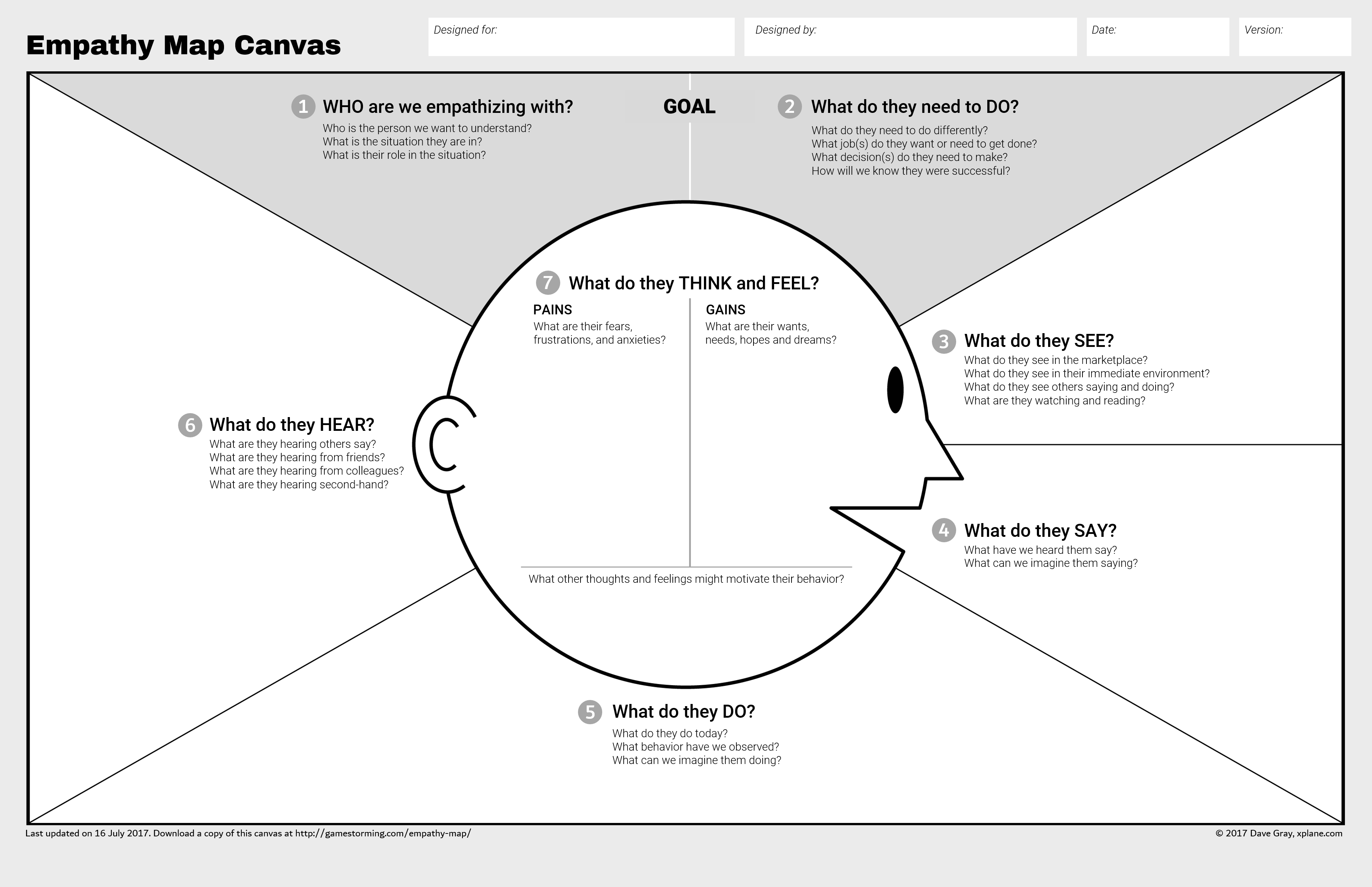
Successfully gain insights from the 7 sections of the Empathy Map (Instructions)
An empathy map is an essential method for simplifying and humanizing products, services. A collaborative focus on this process offers unique emotionally resonant user experiences.
The round-up
When a product deeply connects to a user's desired purpose, it gets easier to create an experience and a brand that connects. Such experiences of products or services tend to remain meaningful to the users. Adopting an empathetic approach in design thinking isn't easy but it helps create a loyal user base and enable brands who apply the phases of design thinking.
Download our discovery playbook, which includes actionable Figma templates for effective empathy mapping.