The scale and scope of web development have exploded exponentially over the last two decades. With 1.8 billion active websites globally, the web development market has gone through transformational changes in this time period.
Traditional web development has a monolithic architecture which despite having some benefits has major drawbacks which become detrimental to the success of an enterprise or a startup alike. Designed on a single block, monolithic web development lacks the scale and flexibility that modern websites require.
The lack of flexibility in a monolithic architecture ultimately became the final nail in its coffin and gave rise to the concept of headless CMSs.
What is a headless or decoupled CMS?
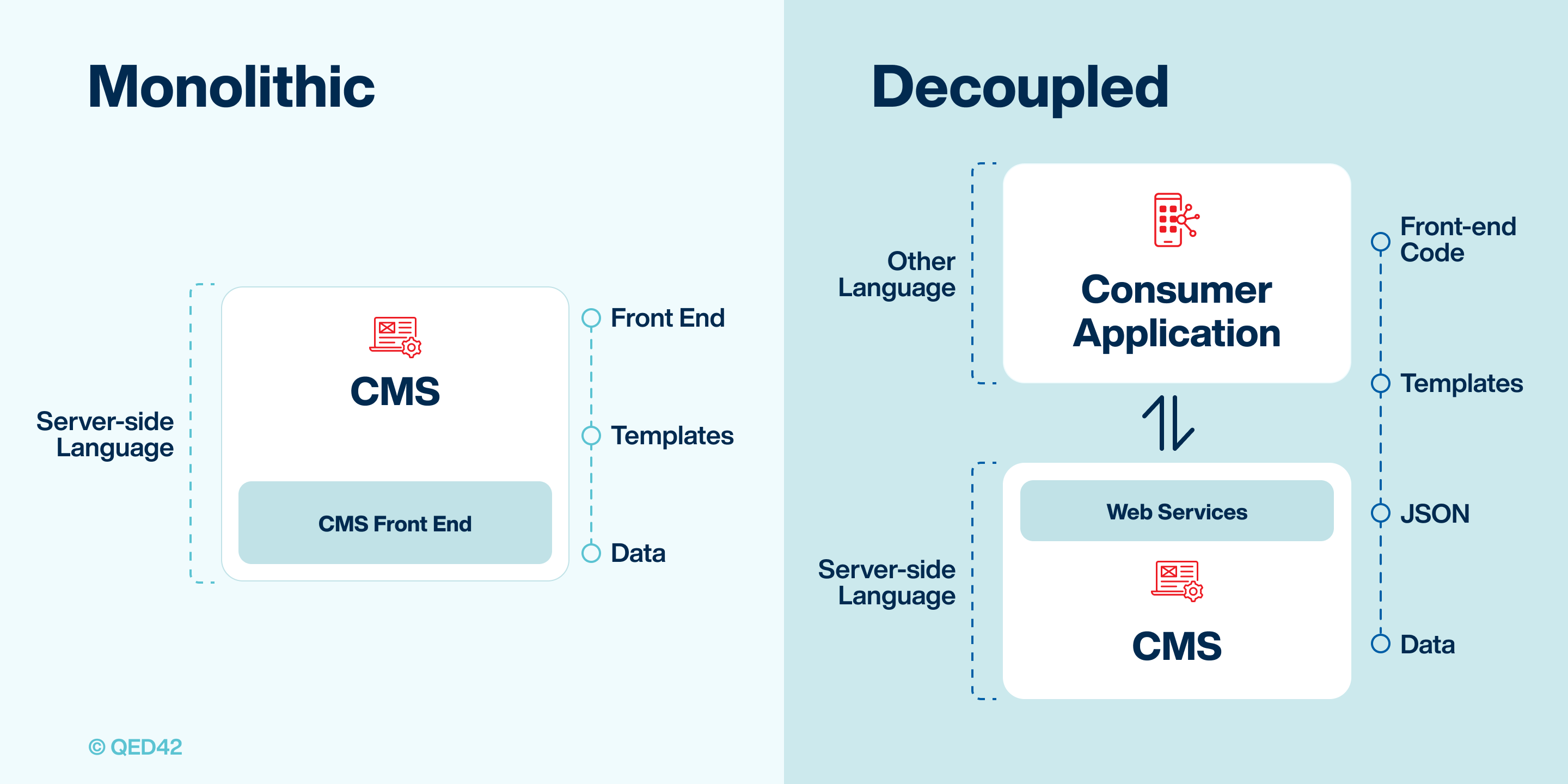
A headless, or decoupled CMS is a modern architecture in software and web development which releases the front-end from the back-end. Designed on different platforms, decoupled architecture presents opportunities that traditional web development can’t even imagine.
Drupal being one of the greatest web development platforms, also presents decoupling options with its hub and spoke model. It integrates all the different spokes (delivery channels) in a single hub (Drupal back-end).
What are the various ways in which you can decouple Drupal?
To be precise about it, there are essentially two ways in which you can decouple Drupal; progressive and fully. Let's talk about them in detail for a bit.
So in order for you to decide which approach suits your situation best, think of the editors+content creators and the developers. Who would you want to have more control?
If you want editors to have more control over the end user’s experience, then it would be best to go for a monolithic approach. Whereas, if you want the developers to have more (or complete) control over the digital experience you’re offering, you’d want to go with a decoupled approach.
A progressively decoupled approach gives you best of both worlds as in such an approach, both the editors will have control over the web experience of the end-users.
Front-end defining how content is displayed in the digital application
In any web development, the front-end is responsible for rendering the web pages on the websites. In a monolithic approach, the front-end and the back-end both rely on the same technology, Drupal in this instance.
JavaScript is one of the major languages on which the front-end of decoupled websites are developed. Why, you may ask? Because it helps in delivering an omnichannel experience with elegant user interfaces. It makes websites performant, it also enables fantastic user interactions via chatbots, APIs, real-time data, an intuitive editorial experience, so on and so forth.
This also facilitates the collection of real-time data resulting in much higher personalization of the user experience, as compared to a monolithic or coupled architecture.
Few front-end options to decouple Drupal with
There are some impressive options when it comes to rendering beautiful user experiences on the Drupal back-end. Listed below are some of these technologies.
Essential ingredients to deliver a complete omnichannel digital experience
In a decoupled framework, there are multiple components interacting and working collaboratively to create an immersive digital experience. Listed below are these components.
Business cases for decoupled Drupal
Decoupled Drupal solves many of the challenges that enterprises face on a daily basis. Some of those challenges are listed below:
Industries in which Decoupled Drupal outshines every other CMS
What decoupled Drupal means for various aspects of your business
Reasons for you to use Drupal as decoupled
How to decide if Decoupled Drupal is best for you
Here are the scenarios in which decoupled can create magic for your digital experience:
QED42 with Decoupled Drupal
We have helped a number of our clients go headless with Drupal. Using headless Commerce, we helped Shop The Area create a multi-vendor e-commerce website that harnesses the power of Drupal to deliver outstanding customer experience.
We used an advanced JavaScript framework to decouple their Drupal website. We used GatsbyJS since it presented an opportunity to solve the business challenges of STA, which was rendering static web pages at blazing fast speeds while also supporting API-enabled e-commerce functions.
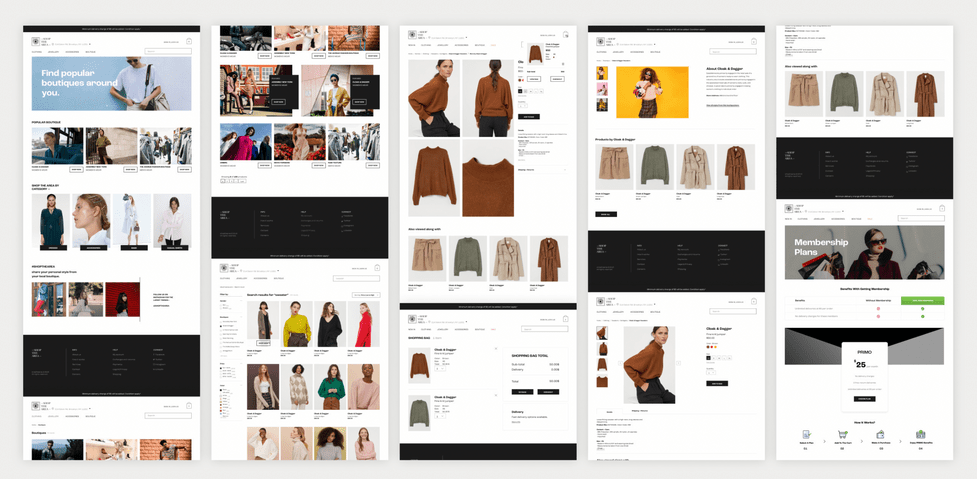
Our approach resulted in an increase in the performance score of STA by 96% and the SEO score increasing by 100%. Explore the detailed case study here.
We have immense expertise in going headless with Drupal and can help you as well to decouple. Explore our decoupled Drupal offerings here.